Software developed by the HEART-GeN group
localQTL
localQTL is a pure-Python library for local-ancestry-aware xQTL mapping that lets researchers run end-to-end analyses on large cohorts without any R/rpy2 dependencies. It preserves the familiar tensorQTL data model with GPU-first execution paths, flexible genotype loaders, and streaming outputs for large-scale workflows, while adding ancestry-aware use cases.
PyPI: https://github.com/heart-gen/localQTL
Documentation: https://localqtl.readthedocs.io/
GENBoostGPU: Genomic Elastic Net Boosting on GPU
GENBoostGPU provides a scalable framework for running elastic net regression with boosting across thousands of CpG sites or regions, leveraging GPU acceleration.
It supports SNP preprocessing, cis-window filtering, LD clumping, missing data imputation, and phenotype integration — all optimized for large-scale epigenomics.
PyPI: https://pypi.org/project/genboostgpu/
Documentation: https://genboostgpu.readthedocs.io/
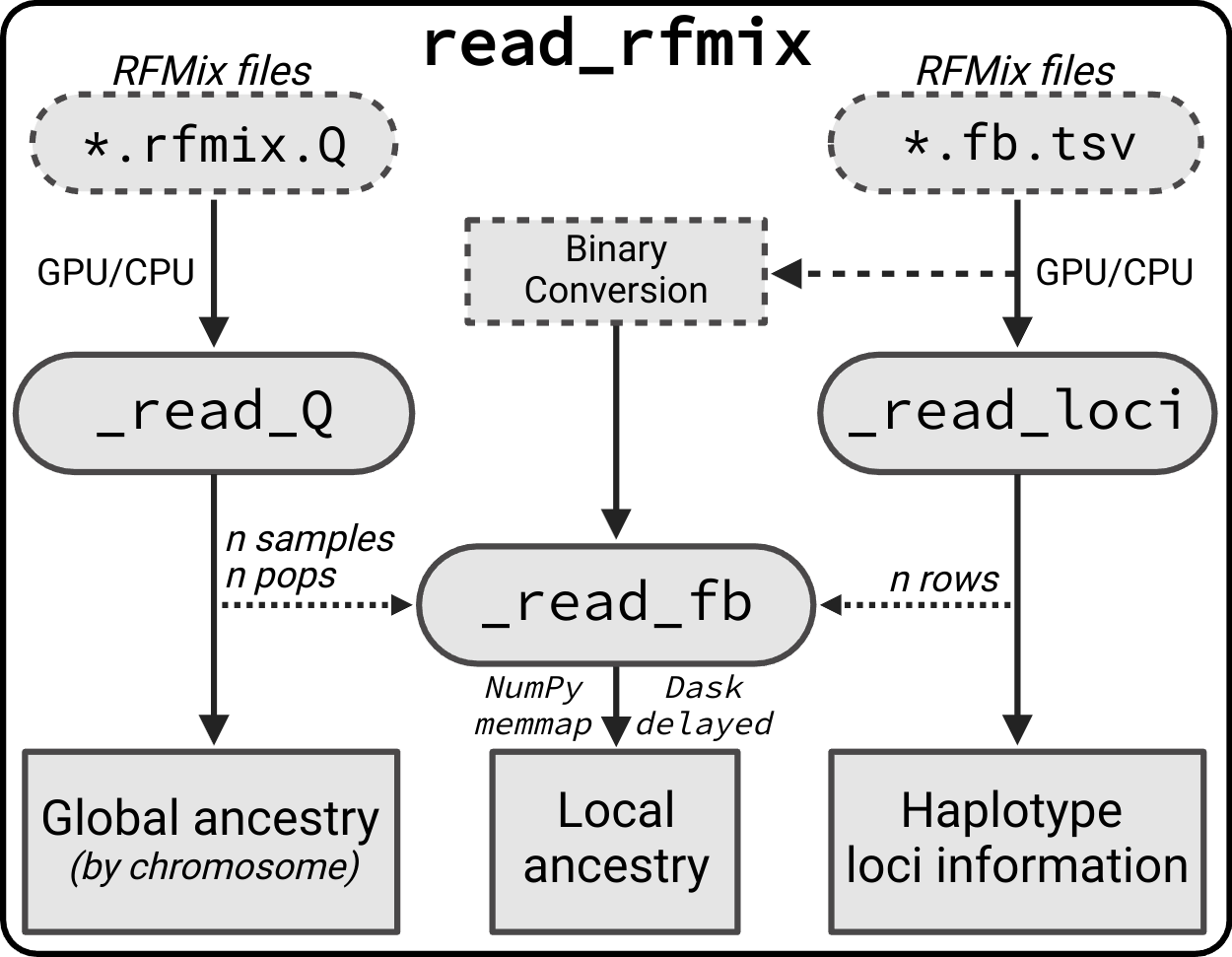
RFMix-reader: Accelerated reading and processing for local ancestry studies
Local ancestry inference is crucial for understanding population history and
disease genetics, especially for eQTL studies in admixed populations. While
RFMix is widely used, handling its output for large datasets is challenging due
to high memory and processing demands. To address this, RFMix-reader
efficiently processes large local ancestry datasets, leveraging GPUs for speed
and minimizing memory usage, enabling deeper insights into human health and
health disparities.
PyPI: https://pypi.org/project/rfmix-reader/
Documentation: http://rfmix-reader.readthedocs.io/
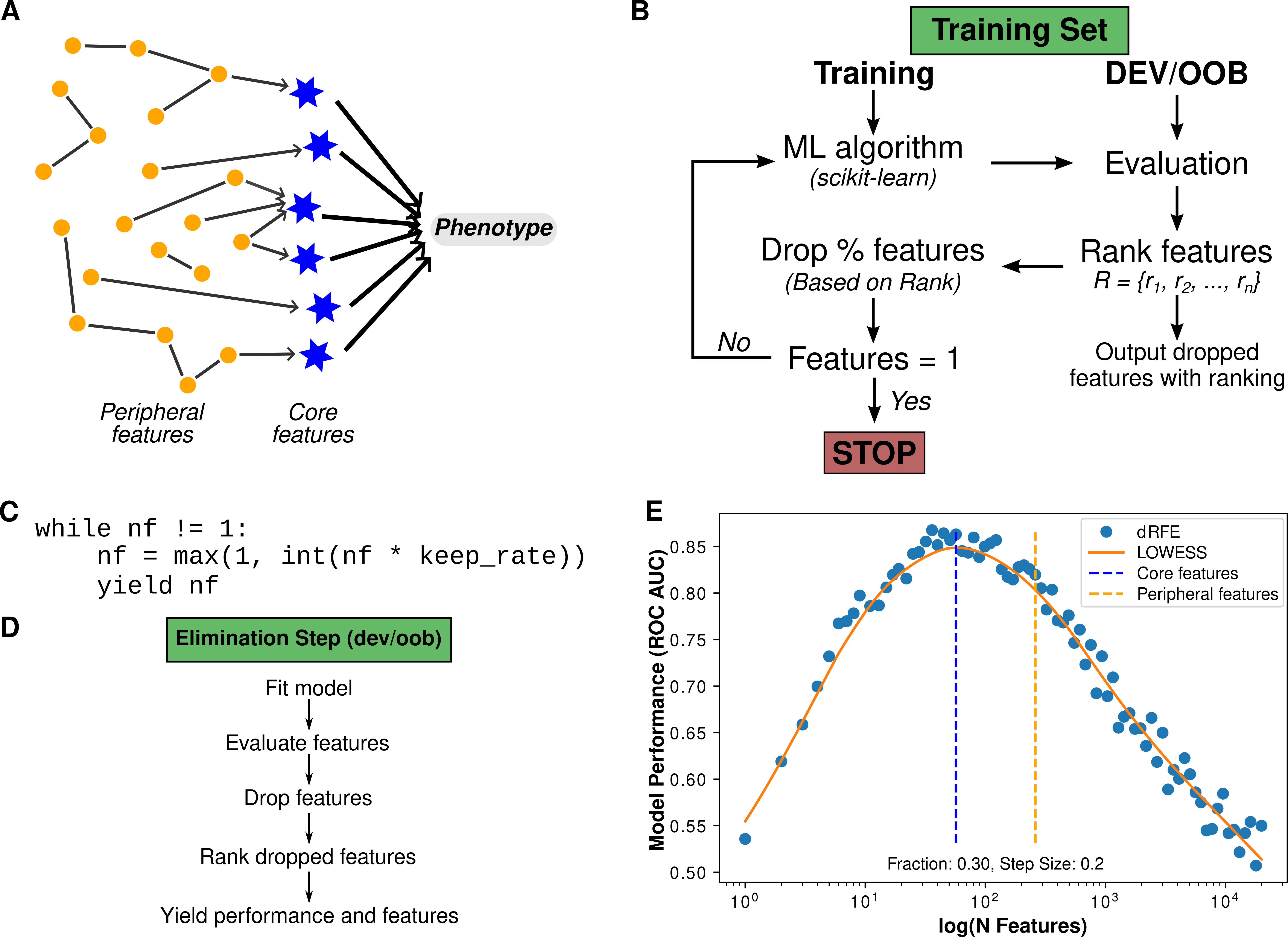
dRFEtools: dynamic recursive feature elimination for omics
Technology advances have generated larger ‘OMICs datasets with applications
for machine learning. Even so, sample availability results in smaller sample
sizes compared to features. Dynamic recursive feature elimination (RFE)
provides a flexible feature elimination framework to tackle this problem.
dRFEtools provides an interpretable and flexible tool to gain biological
insights from ‘OMICs data using machine learning.
PyPI: https://pypi.org/project/drfetools/
Documentation: http://drfetools.readthedocs.io/